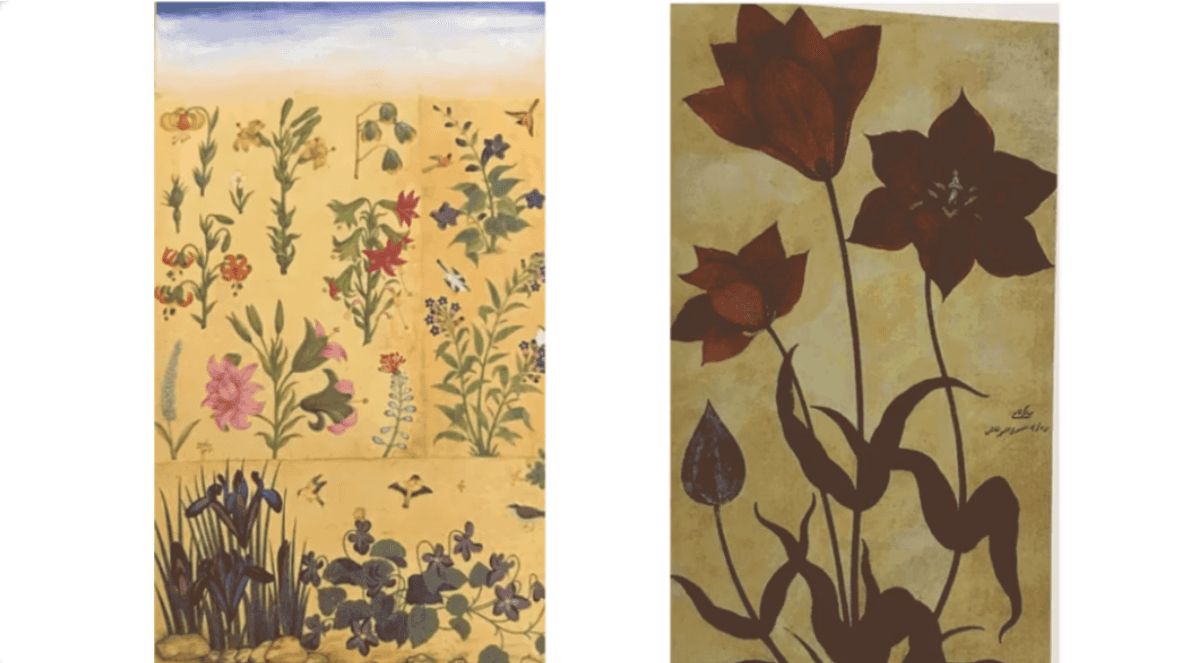
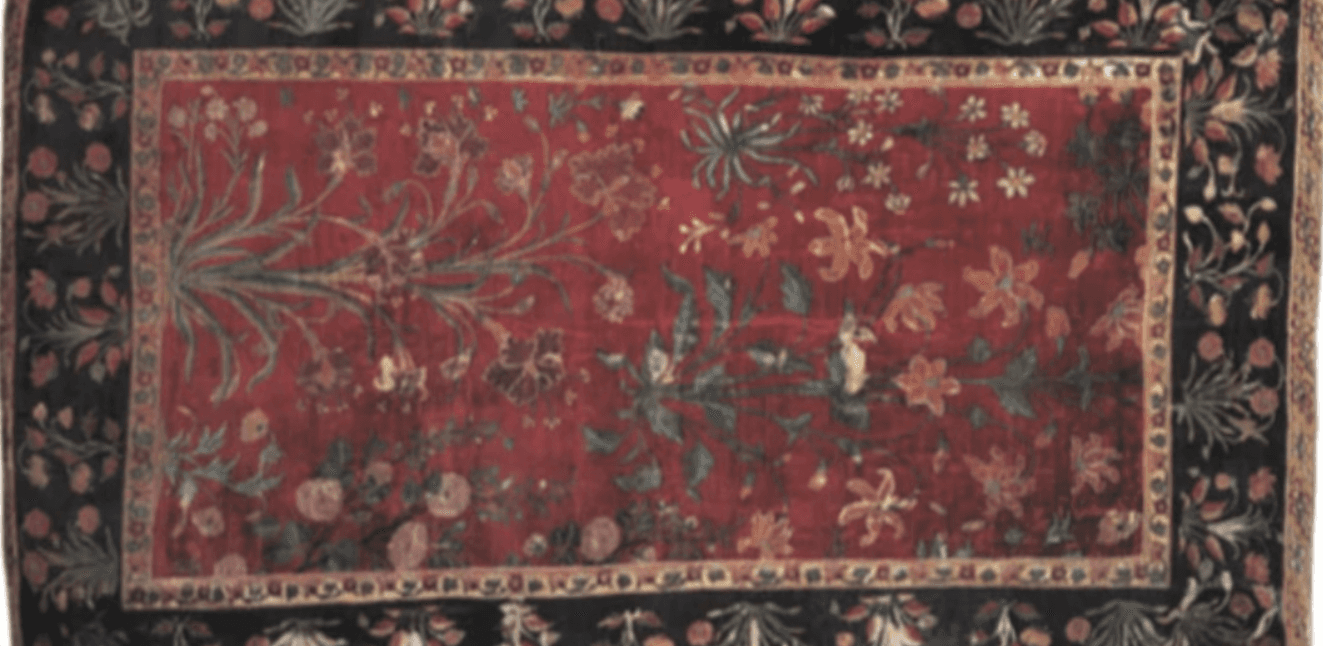
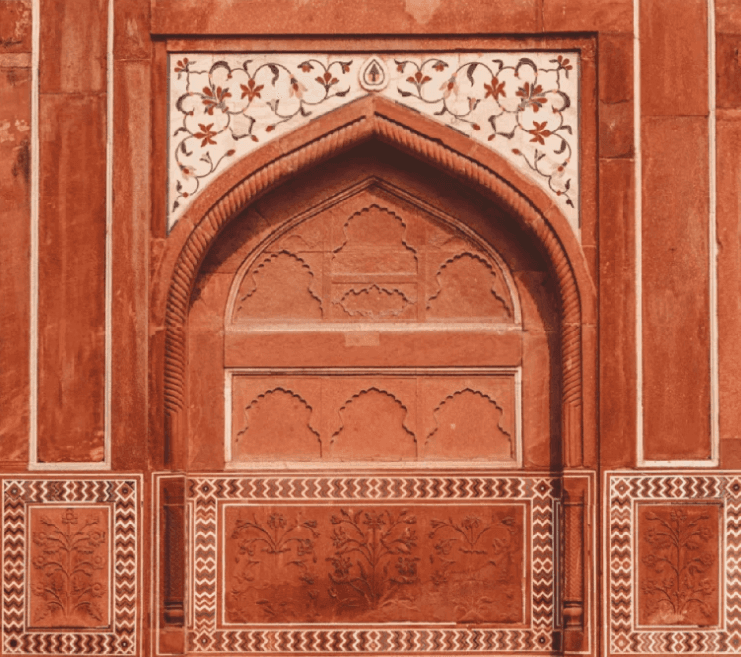
Over the 17th century, in Jehangir’s and then in his successor Shah Jahan’s reign, this Mansur flower is seen increasingly and obsessively adapted as a decorative motif. It can be seen illustrated in paintings, carpets, on pan-daans, Huqqa Base, and on buildings like the Taj Mahal and even in the margins of albums.
An impulse that today most of us recognise and consciously design is logos. Much like royal Insignias, logos serve the purpose of brand identification and are an integral (if not the most integral) part of the brand. Logos like leitmotifs are used across the various components of branding to provide standardization. A concept that Mughals seemed to have known well.
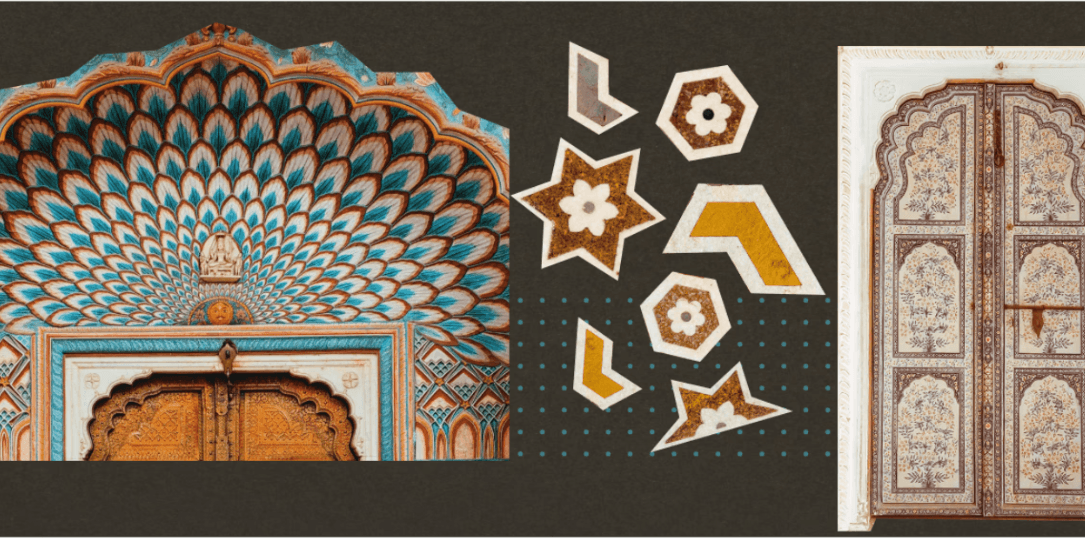
Seen independently placed somewhere, one may ponder over the use of a particular design element and what it may represent. In the Mughals’ case, the Emperor’s incessant urge was to surround the space with the leitmotif of the flower. This is where one accounts for the other elements and recurring patterns that the distinct Mughal design language was building. From the Taj Mahal to Humayun’s Tomb, one may simply glance to recognise the char bagh (Quadrilateral Gardens) with water walkways, the inlay work, the jalis, geometrical design patterns, and recurring building materials to see the visual semblance in Mughal aesthetics.